Skip to content
All Up Literacy
  • Teaching Articles
  • Start Here
  • ShopExpand
    • Online Store
    • TPT Shop
    • Courses
    • My Account
    • Cart
  • Courses
  • Home Support
All Up Literacy

What do you want to learn more about?

Consonants & Vowels SYLLABLE TYPES Syllable Division Spelling Rules & Patterns Sight Words READING Teaching Tools & Strategies Videos

  • 5 Steps for Building Automatic Reading
    Consonants & Vowels | Reading | Spelling | Teaching Tools & Strategies

    5 Steps for Building Automatic Reading

    Have you ever had a student sound out a word correctly, only to get stuck on the exact same word later? Let’s use map. The student looks at the word, gives you /m/ /?/ /p/, blends it together, and says map. Yay! They read it. Then map shows up again later… and they’re back to…

    Read More 5 Steps for Building Automatic ReadingContinue

  • Do I Slow Down or Keep Moving? When What We’ve Taught Isn’t Sticking
    Reading | Spelling Rules & Patterns | Teaching Tools & Strategies

    Do I Slow Down or Keep Moving? When What We’ve Taught Isn’t Sticking

    You’ve taught the rules and patterns, and the student seems to know them. But when it’s time to actually read or spell, they’re still working much harder than you think they should be. This is a tricky place to be with a student. So, do you slow down and really work those earlier skills, or…

    Read More Do I Slow Down or Keep Moving? When What We’ve Taught Isn’t StickingContinue

  • REVLOC vs. CLOVER: Why Syllable Type Order Matters
    Teaching Tools & Strategies | Types of Syllables

    REVLOC vs. CLOVER: Why Syllable Type Order Matters

    If you’ve studied Orton-Gillingham or structured literacy, you’ve probably heard different memory words used to teach syllable types. Some programs use CLOVER.Personally, I prefer REVLOC. Why? Because REVLOC doesn’t just help students remember the syllable types, it also helps them remember the order to check when decoding words. The order really matters. What Does REVLOC…

    Read More REVLOC vs. CLOVER: Why Syllable Type Order MattersContinue

  • Planning Orton-Gillingham Lessons (VIDEO)
    Teaching Tools & Strategies | Videos

    Planning Orton-Gillingham Lessons (VIDEO)

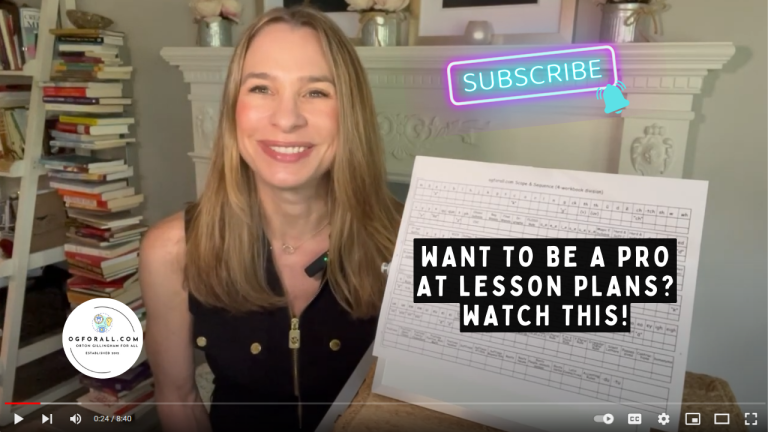
    The video discusses the importance of effective lesson planning and what essential elements should be included. It explores the optimal number of parts in a lesson and how to balance content within time constraints. The article also promotes various educational products and highlights the Orton Gillingham phonics-based teaching method for English learners.

    Read More Planning Orton-Gillingham Lessons (VIDEO)Continue

  • A Simple System for Planning Orton-Gillingham Lessons
    Featured | Teaching Tools & Strategies

    A Simple System for Planning Orton-Gillingham Lessons

    Create Orton Gillingham lesson plans for students in any setting.

    Read More A Simple System for Planning Orton-Gillingham LessonsContinue

  • The 2–2–2 Summer Plan for Reading & Spelling: A Weekly Routine That Works When Summer Gets Messy
    Featured | Reading | Spelling Rules & Patterns | Teaching Tools & Strategies

    The 2–2–2 Summer Plan for Reading & Spelling: A Weekly Routine That Works When Summer Gets Messy

    Summer tends to shift things. One week you’re on a roll, and the next week someone’s at the beach, at camp, or just… done. The truth is, very few are excited about full lessons of summer reading and spelling in July. No matter how great a tutor I am or how many “games” I can…

    Read More The 2–2–2 Summer Plan for Reading & Spelling: A Weekly Routine That Works When Summer Gets MessyContinue

  • Why Students Confuse b and d (And What Actually Helps)
    Consonants & Vowels | Teaching Tools & Strategies

    Why Students Confuse b and d (And What Actually Helps)

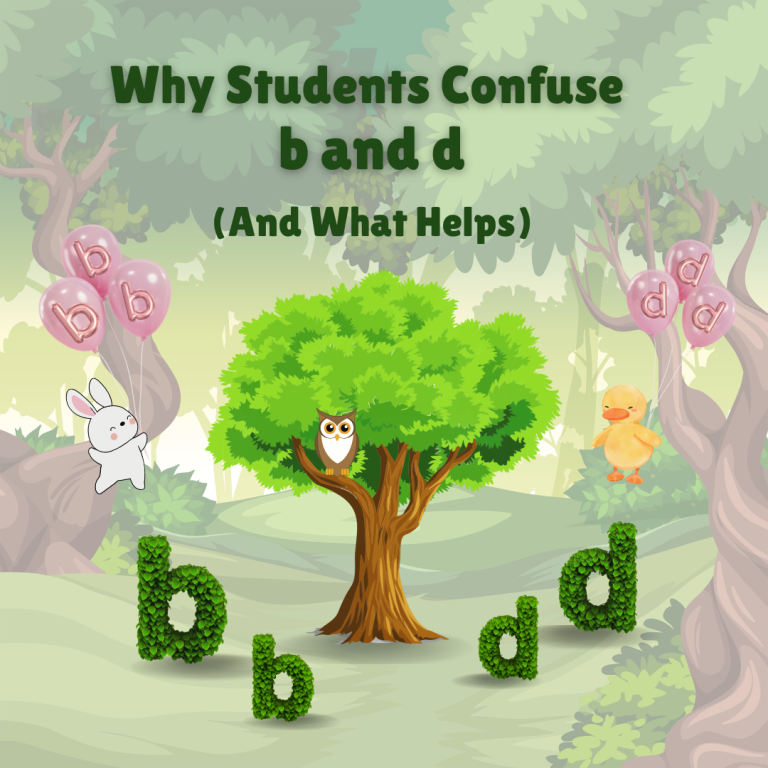
    Most tutors and teachers using the Orton-Gillingham approach have at least one student (or ten!) who confuses b and d. It’s common! And if a student has dyslexia, this confusion can stick around longer and feel more frustrating for both the student and the teacher. The good news? There are simple, effective ways to help….

    Read More Why Students Confuse b and d (And What Actually Helps)Continue

  • How to Use Orton-Gillingham in Group Lessons classroom setting
    Teaching Tools & Strategies

    How to Use Orton-Gillingham in Group Lessons (Whole Class & Small Group)

    Orton-Gillingham is often pictured as one teacher and one student sitting across from each other with sand trays and drill cards. That image isn’t wrong, but it’s incomplete. Most teachers are working with small groups, and sometimes full classes. So, the real question becomes: if OG is oriented to serve one-on-one, multisensory lessons, how does…

    Read More How to Use Orton-Gillingham in Group Lessons (Whole Class & Small Group)Continue

  • Why Guessing Isn’t a Reading Strategy (And What to Do Instead)
    Parent Support | Reading | Teaching Tools & Strategies

    Why Guessing Isn’t a Reading Strategy (And What to Do Instead)

    If your child guesses at words while reading, it’s not a bad habit — it’s a coping strategy. Guessing often shows up when reading feels hard or confusing. Kids guess because they want to keep moving. The goal isn’t to stop guessing through correction. The goal is to replace guessing with decoding. Why guessing happens…

    Read More Why Guessing Isn’t a Reading Strategy (And What to Do Instead)Continue

  • How to Support Reading at Home (Without Turning Into the Teacher)
    Parent Support | Reading | Teaching Tools & Strategies

    How to Support Reading at Home (Without Turning Into the Teacher)

    Supporting your child’s reading at home can feel overwhelming — especially if school hasn’t given clear answers. Many parents worry: Here’s the truth:You don’t need to become a teacher to support your child’s reading. You need structure, clarity, and realistic expectations. What matters more than “doing it right” Children don’t need perfect lessons. They need:…

    Read More How to Support Reading at Home (Without Turning Into the Teacher)Continue

  • My Child Knows Letter Sounds… So Why Is Reading Still So Hard?
    Consonants & Vowels | Parent Support | Reading | Teaching Tools & Strategies

    My Child Knows Letter Sounds… So Why Is Reading Still So Hard?

    If your child can name letter sounds but still struggles to read words, you’re not alone. This is one of the most common concerns parents share: “They know their sounds… so why can’t they read?” Knowing individual sounds is just the first step. Reading requires a child to hold multiple sounds in their working memory,…

    Read More My Child Knows Letter Sounds… So Why Is Reading Still So Hard?Continue

  • How to Make Phonics Lessons Engaging (Without Losing Structure)
    Teaching Tools & Strategies

    How to Make Phonics Lessons Engaging (Without Losing Structure)

    Most educators don’t wake up thinking, “How can I make this lesson boring today?”Quite the opposite. Teachers, tutors, and parents are constantly looking for ways to make lessons feel more engaging, doable, and even fun, especially for younger students and those who lose focus quickly. The challenge is that fun can sometimes feel at odds…

    Read More How to Make Phonics Lessons Engaging (Without Losing Structure)Continue

Page navigation

1 2 3 4 Next PageNext
  • Home
  • Teaching Articles
  • Shop
  • Courses
  • Resources
  • Home Support
  • Start Here
Support OGforALL

© 2026 All Up Literacy Website Design by Christi Fultz

Review Cart

No products in the cart.

  • Teaching Articles
  • Start Here
  • Shop
    • Online Store
    • TPT Shop
    • Courses
    • My Account
    • Cart
  • Courses
  • Home Support
Search