Skip to content
All Up Literacy
  • Teaching Articles
  • Start Here
  • ShopExpand
    • Online Store
    • TPT Shop
    • Courses
    • My Account
    • Cart
  • Courses
  • Home Support
All Up Literacy

What do you want to learn more about?

Consonants & Vowels SYLLABLE TYPES Syllable Division Spelling Rules & Patterns Sight Words READING Teaching Tools & Strategies Videos

  • 5 Steps for Building Automatic Reading
    Consonants & Vowels | Reading | Spelling | Teaching Tools & Strategies

    5 Steps for Building Automatic Reading

    Have you ever had a student sound out a word correctly, only to get stuck on the exact same word later? Let’s use map. The student looks at the word, gives you /m/ /?/ /p/, blends it together, and says map. Yay! They read it. Then map shows up again later… and they’re back to…

    Read More 5 Steps for Building Automatic ReadingContinue

  • Do I Slow Down or Keep Moving? When What We’ve Taught Isn’t Sticking
    Reading | Spelling Rules & Patterns | Teaching Tools & Strategies

    Do I Slow Down or Keep Moving? When What We’ve Taught Isn’t Sticking

    You’ve taught the rules and patterns, and the student seems to know them. But when it’s time to actually read or spell, they’re still working much harder than you think they should be. This is a tricky place to be with a student. So, do you slow down and really work those earlier skills, or…

    Read More Do I Slow Down or Keep Moving? When What We’ve Taught Isn’t StickingContinue

  • Consonant-LE Words Explained: Table Words, Puzzle Words, and Syllable Division
    Syllable Division | Types of Syllables

    Consonant-LE Words Explained: Table Words, Puzzle Words, and Syllable Division

    If you’ve taught syllable types and syllable division, you’ve probably come across consonant-LE words like table, little, and puzzle. These are a different type of syllable division than students are used to because the final -le doesn’t follow what we typically think of as a syllable. The good news is that consonant+LE words follow a…

    Read More Consonant-LE Words Explained: Table Words, Puzzle Words, and Syllable DivisionContinue

  • Teaching Open & Closed Prefixes: A Guide for Teaching Morphology
    Prefixes/Suffixes

    Teaching Open & Closed Prefixes: A Guide for Teaching Morphology

    If you’ve been teaching syllable types, you already know about open and closed syllables. Now we’re going to borrow those same ideas to talk about prefixes. A prefix is a word part added to the beginning of another word. It changes the meaning of the base word. Think about these: Once students begin recognizing prefixes,…

    Read More Teaching Open & Closed Prefixes: A Guide for Teaching MorphologyContinue

  • VCCCV Syllable Division: Blends, Digraphs, and Word Lists
    Syllable Division

    VCCCV Syllable Division: Blends, Digraphs, and Word Lists

    A VCCCV word contains a vowel followed by three consonants and then another vowel sound. When students see these words, they use their knowledge of blends and digraphs to know where the word should be divided. VCCCV, Vowel-Consonant-Consonant-Consonant-Vowel looks longer and possibly more challenging than other division rules, but it’s not as scary as it…

    Read More VCCCV Syllable Division: Blends, Digraphs, and Word ListsContinue

  • REVLOC vs. CLOVER: Why Syllable Type Order Matters
    Teaching Tools & Strategies | Types of Syllables

    REVLOC vs. CLOVER: Why Syllable Type Order Matters

    If you’ve studied Orton-Gillingham or structured literacy, you’ve probably heard different memory words used to teach syllable types. Some programs use CLOVER.Personally, I prefer REVLOC. Why? Because REVLOC doesn’t just help students remember the syllable types, it also helps them remember the order to check when decoding words. The order really matters. What Does REVLOC…

    Read More REVLOC vs. CLOVER: Why Syllable Type Order MattersContinue

  • Practicing Vowel Team Generalizations: OI/OY, OU/OW, and AU/AW
    Consonants & Vowels | Spelling Rules & Patterns | Vowel Teams

    Practicing Vowel Team Generalizations: OI/OY, OU/OW, and AU/AW

    Now that you understand how vowel team generalizations work, the next step is helping students actually apply them in reading and spelling. New to Vowel Team Generalizations? If you need a full explanation of how vowel team generalizations work and why these spelling patterns matter, start here first: Vowel Team Generalizations Explained: OI/OY, OU/OW, and…

    Read More Practicing Vowel Team Generalizations: OI/OY, OU/OW, and AU/AWContinue

  • Vowel Team Spelling Generalizations: OI/OY, OU/OW, AU/AW Explained
    Consonants & Vowels | Spelling Rules & Patterns | Vowel Teams

    Vowel Team Spelling Generalizations: OI/OY, OU/OW, AU/AW Explained

    Vowel Team Generalizations are taught for students to know the sounds and placement of OI/OY, OU/OW, AU/AW in words.

    Read More Vowel Team Spelling Generalizations: OI/OY, OU/OW, AU/AW ExplainedContinue

  • Planning Orton-Gillingham Lessons (VIDEO)
    Teaching Tools & Strategies | Videos

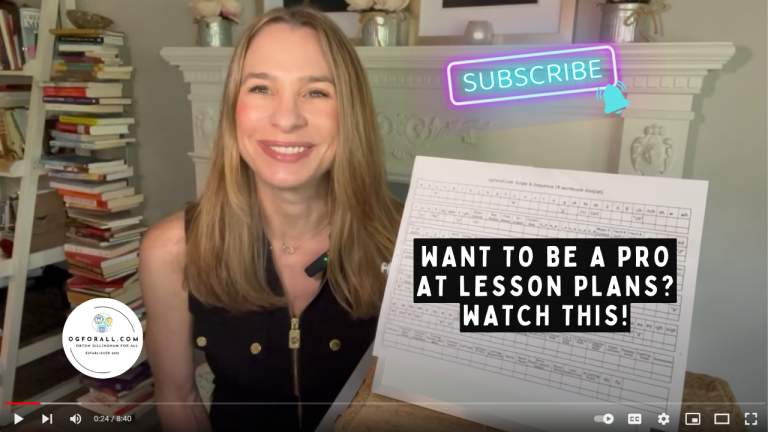
    Planning Orton-Gillingham Lessons (VIDEO)

    The video discusses the importance of effective lesson planning and what essential elements should be included. It explores the optimal number of parts in a lesson and how to balance content within time constraints. The article also promotes various educational products and highlights the Orton Gillingham phonics-based teaching method for English learners.

    Read More Planning Orton-Gillingham Lessons (VIDEO)Continue

  • A Simple System for Planning Orton-Gillingham Lessons
    Featured | Teaching Tools & Strategies

    A Simple System for Planning Orton-Gillingham Lessons

    Create Orton Gillingham lesson plans for students in any setting.

    Read More A Simple System for Planning Orton-Gillingham LessonsContinue

  • Wild Old Kind Words: Why These Words Break the Rules (and How to Teach Them)
    Sight Words

    Wild Old Kind Words: Why These Words Break the Rules (and How to Teach Them)

    You may have already taught closed syllables — the idea that when a vowel is “closed in” by consonants, it usually makes a short sound. And most of the time, that works. But then you run into words like old, find, or wild… and suddenly the rule doesn’t seem to apply anymore. These are often…

    Read More Wild Old Kind Words: Why These Words Break the Rules (and How to Teach Them)Continue

  • The 2–2–2 Summer Plan for Reading & Spelling: A Weekly Routine That Works When Summer Gets Messy
    Featured | Reading | Spelling Rules & Patterns | Teaching Tools & Strategies

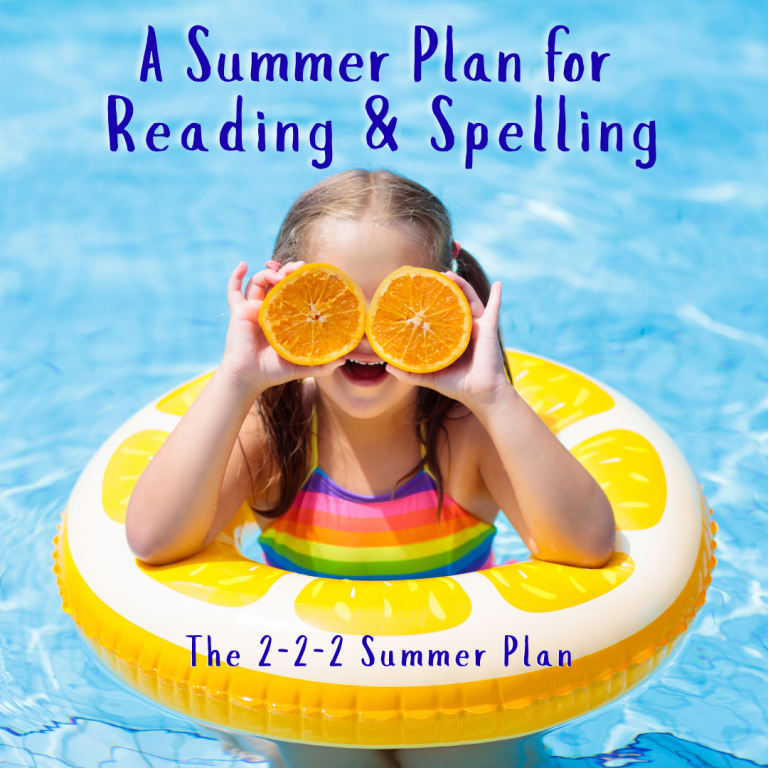
    The 2–2–2 Summer Plan for Reading & Spelling: A Weekly Routine That Works When Summer Gets Messy

    Summer tends to shift things. One week you’re on a roll, and the next week someone’s at the beach, at camp, or just… done. The truth is, very few are excited about full lessons of summer reading and spelling in July. No matter how great a tutor I am or how many “games” I can…

    Read More The 2–2–2 Summer Plan for Reading & Spelling: A Weekly Routine That Works When Summer Gets MessyContinue

Page navigation

1 2 3 … 11 Next PageNext
  • Home
  • Teaching Articles
  • Shop
  • Courses
  • Resources
  • Home Support
  • Start Here
Support OGforALL

© 2026 All Up Literacy Website Design by Christi Fultz

Review Cart

No products in the cart.

  • Teaching Articles
  • Start Here
  • Shop
    • Online Store
    • TPT Shop
    • Courses
    • My Account
    • Cart
  • Courses
  • Home Support
Search