Skip to content
All Up Literacy
  • Teaching Articles
  • Start Here
  • ShopExpand
    • Online Store
    • TPT Shop
    • Courses
    • My Account
    • Cart
  • Courses
  • Home Support
All Up Literacy

What do you want to learn more about?

Consonants & Vowels SYLLABLE TYPES Syllable Division Spelling Rules & Patterns Sight Words READING Teaching Tools & Strategies Videos

  • Why Students Confuse b and d (And What Actually Helps)
    Consonants & Vowels | Teaching Tools & Strategies

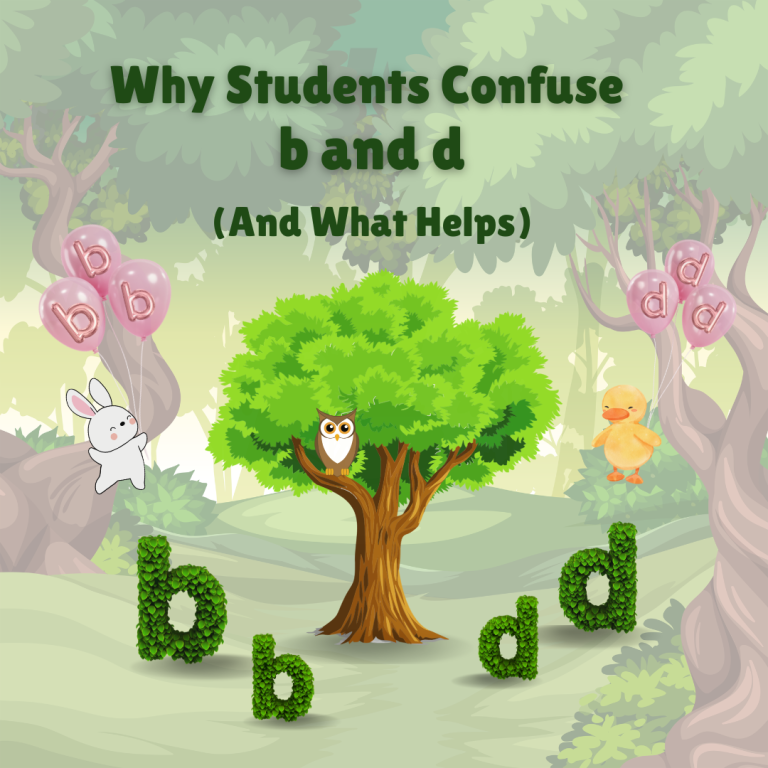
    Why Students Confuse b and d (And What Actually Helps)

    Most tutors and teachers using the Orton-Gillingham approach have at least one student (or ten!) who confuses b and d. It’s common! And if a student has dyslexia, this confusion can stick around longer and feel more frustrating for both the student and the teacher. The good news? There are simple, effective ways to help….

    Read More Why Students Confuse b and d (And What Actually Helps)Continue

  • SOS Spelling Strategy + Sight Word Lists by Grade
    Sight Words

    SOS Spelling Strategy + Sight Word Lists by Grade

    In Orton-Gillingham, we teach students to decode and spell using rules. We break words apart. We analyze sounds. We follow structure. But then come the words that don’t cooperate. Words like said, was, one, and does. They don’t follow the rules we’ve taught. They are sight words, and will just have to be memorized. So…

    Read More SOS Spelling Strategy + Sight Word Lists by GradeContinue

  • How to Use Orton-Gillingham in Group Lessons classroom setting
    Teaching Tools & Strategies

    How to Use Orton-Gillingham in Group Lessons (Whole Class & Small Group)

    Orton-Gillingham is often pictured as one teacher and one student sitting across from each other with sand trays and drill cards. That image isn’t wrong, but it’s incomplete. Most teachers are working with small groups, and sometimes full classes. So, the real question becomes: if OG is oriented to serve one-on-one, multisensory lessons, how does…

    Read More How to Use Orton-Gillingham in Group Lessons (Whole Class & Small Group)Continue

  • VCV syllable division featuring Tiger and Camel word examples ti/ger and cam/el
    Syllable Division | Word Stress & Accenting Rules

    How to Teach VCV Syllable Division (When to Split Before or After the Vowel)

    VCV words can make syllable division feel confusing. I always (jokingly) say, if you can master VCV syllable division, you can understand any structured literacy concept and rule! With VCV words, we don’t divide first and hope it sounds right, we divide and listen, then decide if the first syllable is open or closed based…

    Read More How to Teach VCV Syllable Division (When to Split Before or After the Vowel)Continue

  • How to Support Reading at Home (Without Turning Into the Teacher)
    Parent Support | Reading | Teaching Tools & Strategies

    How to Support Reading at Home (Without Turning Into the Teacher)

    Supporting your child’s reading at home can feel overwhelming — especially if school hasn’t given clear answers. Many parents worry: Here’s the truth:You don’t need to become a teacher to support your child’s reading. You need structure, clarity, and realistic expectations. What matters more than “doing it right” Children don’t need perfect lessons. They need:…

    Read More How to Support Reading at Home (Without Turning Into the Teacher)Continue

  • How to Make Phonics Lessons Engaging (Without Losing Structure)
    Teaching Tools & Strategies

    How to Make Phonics Lessons Engaging (Without Losing Structure)

    Most educators don’t wake up thinking, “How can I make this lesson boring today?”Quite the opposite. Teachers, tutors, and parents are constantly looking for ways to make lessons feel more engaging, doable, and even fun, especially for younger students and those who lose focus quickly. The challenge is that fun can sometimes feel at odds…

    Read More How to Make Phonics Lessons Engaging (Without Losing Structure)Continue

  • Spelling Rules | Forget the Rhyme, Teach the IE/EI Rule
    Featured | Spelling Rules & Patterns | Vowel Teams

    Spelling Rules | Forget the Rhyme, Teach the IE/EI Rule

    Most people know the old spelling rule rhyme, ‘I before E except after C,’ but in Orton-Gillingham, we go a step further to make this rule crystal clear for our students. What Is the IE/EI Rule? In OG, the full rule is: Use I before E except after C, when spelling long E. So what…

    Read More Spelling Rules | Forget the Rhyme, Teach the IE/EI RuleContinue

  • Orton-Gillingham for Every Setting: Home, Pods, Classrooms, and Tutoring
    Featured | Teaching Tools & Strategies

    Orton-Gillingham for Every Setting: Home, Pods, Classrooms, and Tutoring

    If you’ve been curious about how to bring Orton-Gillingham (OG) and the Three-Part Drill into any setting, you’re in the right place. OG works beautifully in classrooms, kitchen table learning, micro-schools, tutoring pods, and even virtual sessions.

    Read More Orton-Gillingham for Every Setting: Home, Pods, Classrooms, and TutoringContinue

  • What Is a Three-Part Drill?
    Consonants & Vowels | Featured | Reading | Teaching Tools & Strategies

    What Is a Three-Part Drill?

    What is the 3 Part Drill in Structured Literacy? A Simple Explanation and scripts for teaching students.
    The Three-Part Drill is a key component of Orton-Gillingham lessons. It’s a multi-sensory practice that helps students become automatic with the sounds, symbols, and spellings of the English language.

    Read More What Is a Three-Part Drill?Continue

  • VCCV Hornet Words List (R-Controlled Syllable Division)
    Syllable Division

    VCCV Hornet Words List (R-Controlled Syllable Division)

    In teaching syllable division, we know the VCCV pattern is a big one. VCCV is the first pattern we use, giving students that lightbulb moment. Suddenly, long words don’t look so intimidating. Hornet Words are one of the four VCCV patterns we teach in Orton-Gillingham: Rabbit, Reptile, Candy… and then Hornet. Hornet words are VCCV…

    Read More VCCV Hornet Words List (R-Controlled Syllable Division)Continue

  • VCCV Reptile Words List (Magic E Syllable Division)
    Syllable Division

    VCCV Reptile Words List (Magic E Syllable Division)

    If your students understand VCCV syllable division with RABBIT words (two closed syllables: C/C), they’re ready for the next step in VCCV syllable division. The next step is learning VCCV Reptile words. Reptile words are VCCV words made up of one closed syllable followed by a Magic E syllable. In Orton-Gillingham, students divide between the…

    Read More VCCV Reptile Words List (Magic E Syllable Division)Continue

  • What’s the Difference In Orton-Gillingham, Science of Reading, LETRS, and IMSE?
    Featured | Teaching Tools & Strategies

    What’s the Difference In Orton-Gillingham, Science of Reading, LETRS, and IMSE?

    Hint: Not as much as you think. While teaching Orton-Gillingham (OG), I often come across other approaches like the Science of Reading, LETRS, and IMSE. At first, I wondered: Are these all different programs? Do I need to learn them all? But once I began digging into the details, I realized something important—they’re all speaking…

    Read More What’s the Difference In Orton-Gillingham, Science of Reading, LETRS, and IMSE?Continue

Page navigation

Previous PagePrevious 1 2 3 4 … 11 Next PageNext
  • Home
  • Teaching Articles
  • Shop
  • Courses
  • Resources
  • Home Support
  • Start Here
Support OGforALL

© 2026 All Up Literacy Website Design by Christi Fultz

Review Cart

No products in the cart.

  • Teaching Articles
  • Start Here
  • Shop
    • Online Store
    • TPT Shop
    • Courses
    • My Account
    • Cart
  • Courses
  • Home Support
Search